
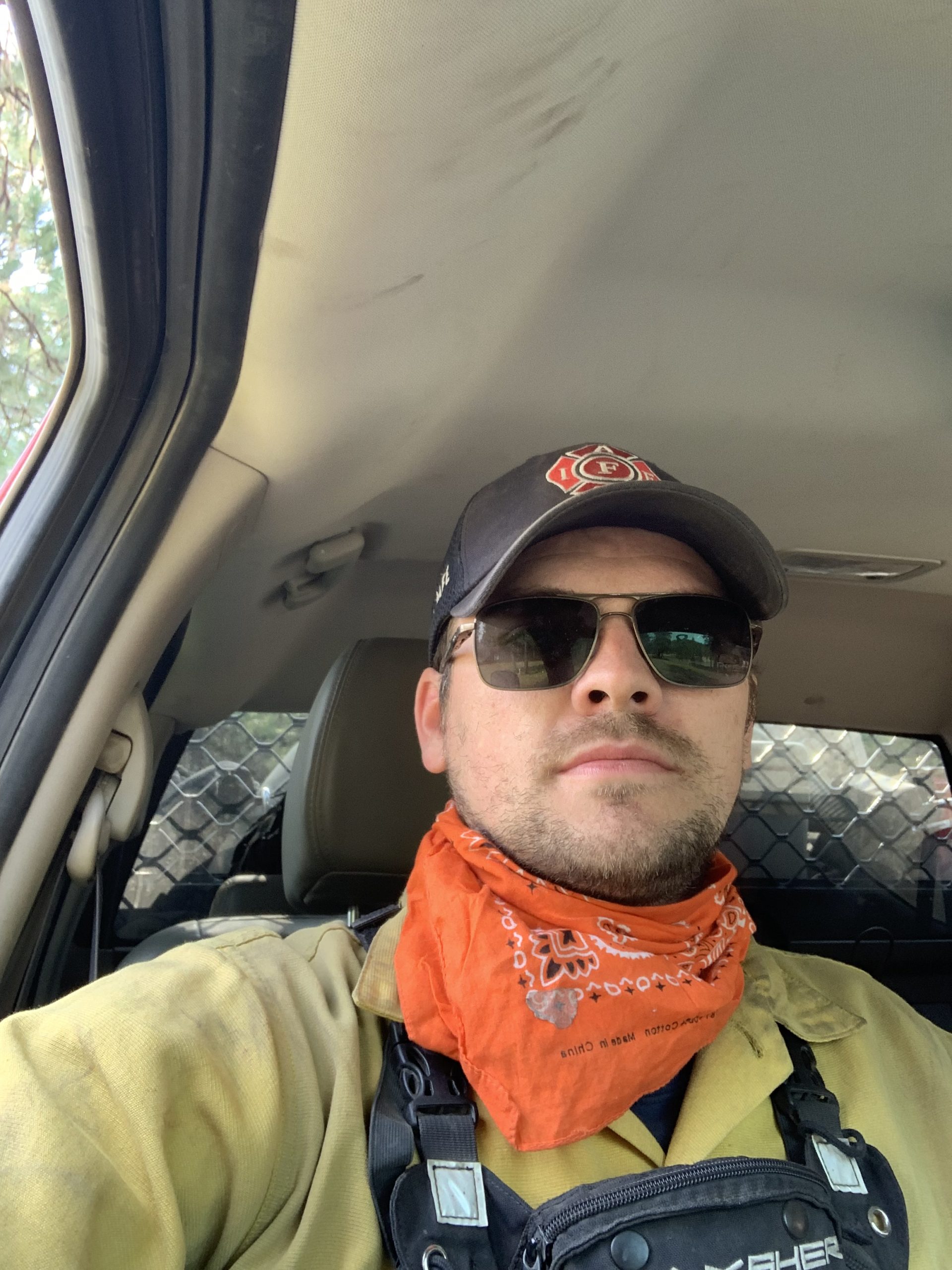
On my first day as a volunteer firefighter, my very first call was a structure fire. This is not too common in the fire/EMS industry, as 75% of our calls are EMS-related. For a very impressionable teenager, I was instantly drawn to fire in a powerful way. The allure of running into a burning building was loaded with the adrenaline-filled lifestyle I was craving. It wasn’t Army Special Forces, but it was what I could get at that point in my life.
The next call I responded to was a possible brush fire at the top of the lake. Lake Cushman is no small body of water; it was a long, winding road all the way to Party Rock, where the fire had been reported. From about five miles away, we spotted a decent column of smoke forming. To me, that meant one thing: fire. It was early July 2006, and the summer heat was starting to set in.
We cruised up the road in an old brush truck—a small vehicle with a tiny water tank, designed to maneuver easily in off-road environments. When we reached Party Rock, located on the water side of US Forest Service Road 24, we found a prime hangout spot where people came to jump into the lake. Looking north, up the hill, all I could see was a massive rock, and on the other side, a growing column of smoke. My partner and I were tasked with figuring out what was going on. I threw on my structure fire pants (the only gear I knew how to use at the time) and we hiked up the hill.
When we got to the rock, about 150 yards above the road, we rounded it and looked. It was like stepping into another world—a world where the devil lived. It was hot, orange, and utterly mesmerizing. I could have stood there, staring at the fire, for hours. Then the radio chirped. I heard the voice of a neighboring fire department chief, Chief Heinrich, instructing everyone to get off the hill and back to the road.
I was baffled. Why the hell were we leaving? Aren’t we firefighters? Aren’t we supposed to fight fires? But now, I was being told to back away. It was so confusing! But again, I had no idea what I was doing. I wasn’t fighting the fire; I was just trailblazing into a blazing trail. Not exactly productive.
When we got back down to the bottom of the hill, I met firefighters from around the county who had arrived to help. This is where I learned a lot about wildland firefighting. It’s a game of strategy—a long-term fight. We needed to build fire lines based on contingencies and trigger points, taking into account the type of terrain, critical infrastructure, and whether the fire threatened people, property, or culturally significant areas. There’s a lot to it. Not to mention the sheer complexity of organizing massive resources across a large area with already poor radio communications. It’s downright dangerous.
It was going to be a long night, but luckily, my lack of experience in the wildland world worked in my favor. I was completely unprepared, wearing those structure fire pants, which meant I could only work for an hour before I had to be sent home. That brief exposure, though, sparked a new interest in wildland firefighting. Fire became my obsession. I needed it, I craved it, and I was completely captivated by the excitement of it all.

